



 5 minutes to read
2026-10-02
Joseph Sison
Inverted Flag Pattern: How It Works and How to Use It in Online Trading


When a market drops sharply, price doesn't always continue straight down. Sometimes it pauses and consolidates before making another move. This is where the inverted flag pattern, also called the reverse flag pattern, can appear.
The pattern can help traders spot potential bearish continuation setups in online trading. Here's what to look for and how traders may use it.
What is an Inverted Flag Pattern?
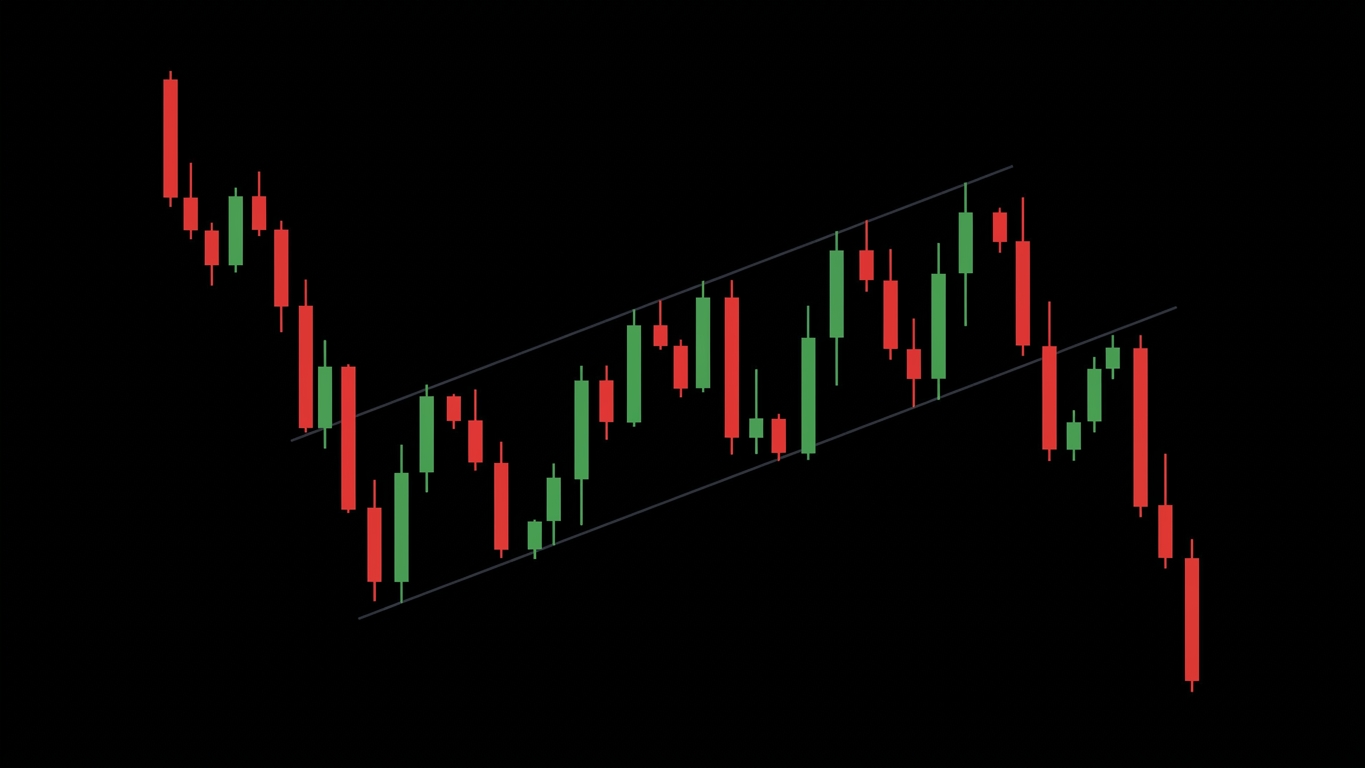
An inverted flag is a bearish continuation pattern that forms during a downward trend. It has two main parts:
- Flagpole: A strong, relatively sharp drop in price.
- Flag: A short period of consolidation after the decline. Price may move sideways or make a small upward correction.
The pattern is completed when price breaks below the lower boundary of the flag. This can signal that the downward trend is resuming. The consolidation should generally be relatively short and small compared with the initial decline. A long or wide-ranging consolidation may indicate that the market is changing rather than simply pausing.
How to Identify an Inverted Flag Pattern
Step 1: Start by looking for a clear downward move. After the decline, watch for a period where price stops falling and begins moving within a narrower range. The temporary recovery can make the flag slope slightly upward, although it can also move mostly sideways. The important thing is that the broader bearish trend remains intact.
Step 2: Watch for consolidation. The setup becomes more interesting when price breaks below the lower edge of the consolidation. Some traders wait for additional confirmation, such as looking at the broader market trend, higher-timeframe price action, or using technical indicators.
Step 3: Confirm the breakout. A breakout isn't guaranteed to continue, though. If price quickly moves back inside the flag, the breakout may have been false.
Using Inverted Flag Patterns in Online Trading
The reverse flag pattern can be used as part of a bearish online trading strategy. A simple approach is to identify the downward trend, wait for the consolidation, and then watch for a break below the flag. Some traders wait for price to break below the flag before entering, using the breakout as confirmation that the downward move may be continuing.
The timeframe can also affect how quickly the setup plays out. A flag on a five-minute chart may break down within minutes, while one on a longer timeframe can take much longer to develop. Choose a timeframe that fits your trading approach and the type of move you're looking for.
It's also worth watching the price after the breakout. Continued lower movement can support the setup, while a quick reversal back into the flag can signal that the pattern has failed.
To Sum Up
The inverted flag pattern can help traders spot potential bearish continuation setups, but it doesn't guarantee that price will keep falling. Look at the wider market trend and other signals before acting on the pattern. If you're new to the setup, practice it on a demo account to understand how it behaves without risking real money.
Latest Posts
Trading Education
Trading News
Trading Strategies
Promotions & Tournaments
Success Stories & Tips
Platform Updates
Global events, stocks, crypto, forex
ExpertOption Reviews: An Honest Overview and Tips from Traders
5 minutes to readExpertOption Withdrawal Policy: How Withdrawals Work and Why Balance Management Matters
5 minutes to readExpertOption Reviews: An Honest Overview and Tips from Traders
5 minutes to readExpertOption Withdrawal Policy: How Withdrawals Work and Why Balance Management Matters
5 minutes to read