



 10 minutes to read
2026-07-27
Nadia Anwar
Best Trading Strategy for Beginners: Tips, Tricks & Mistakes to Avoid


Most new traders open a chart, see a price moving, and jump in on a feeling. It works, sometimes, but it isn't something you can learn from. A trading strategy is what turns that guesswork into a process — a set of rules you can actually test, review, and improve over time.
If you're just getting started, this guide walks through what a strategy really is, the most common approaches traders use, practical trading tips, the mistakes that trip up almost every beginner, and why practicing first — on a free ExpertOption demo account — matters more than most may think.
What Is a Trading Strategy?
A trading strategy is a set of rules for when to get into a trade, when to get out, and how much money to risk along the way. It takes the emotion out of the decision by replacing "I have a good feeling about this" with "these specific conditions are met, so I'm taking this trade."
A good strategy answers a few basic questions:
- Which asset or market are you trading, and why?
- What tells you it's time to get in?
- Where's your exit point, whether the trade goes well or badly?
- How much of your account are you willing to risk on one trade?
None of this has to be complicated. Even a simple rule, like only trading when a moving average confirms the trend, counts as a strategy. What matters is that you set it before the trade, not while you're in the middle of one with emotions running high.
Why Every Trader Needs a Trading Strategy
Without a strategy, every decision is a reaction. You buy because the price is climbing and you don't want to miss out. You sell in a panic because it dipped. Trading like this is driven by emotion, and emotion makes a poor substitute for a plan.
A strategy gives you three things that trading on impulse never will:
- Consistency — you're using the same logic every time, so it's easier to look back and see what's actually working.
- Discipline — a set exit point means you're less likely to hold onto a losing trade out of hope, or bail on a winning one out of fear.
- Feedback you can actually use — if something isn't working, you can see why and adjust, instead of repeating the same mistakes without realizing it.
Traders who skip this step tend to get wildly inconsistent results, because they're basically testing a different, unwritten "strategy" every time they trade.
Popular Types of Trading Strategies To Know
There's no single best trading strategy that works for everyone; the right one depends on your schedule, risk tolerance, and the assets you're interested in. A few approaches show up again and again among beginner and experienced traders alike.
- Trend following: This strategy is built around identifying the general direction of the market — up, down, or sideways — and trading in that direction rather than against it. Tools like moving averages are commonly used to confirm a trend before entering.
- Range trading: Instead of following a trend, range traders look for prices bouncing between a support level (a floor) and a resistance level (a ceiling), buying near the bottom of that range and selling near the top.
- Breakout trading: This focuses on identifying key price levels and entering a trade when the price pushes decisively through them, on the theory that a strong move in one direction is likely to continue.
- News-based trading: Since markets often react quickly to economic data, earnings reports, or major news events, some traders build their entries around anticipated volatility from scheduled announcements.
- Copy or social trading: Rather than building a strategy from scratch, some beginners choose to follow and mirror the trades of more experienced traders on the platform, which can be a useful way to learn patterns and expert option trading tricks before developing an independent approach.
Many traders end up blending elements from more than one of these, adjusting as they learn which approach fits their style. The core logic of a strategy carries over between asset types — a trend-following approach works whether you're trading currency pairs, stocks, or commodities — but each market moves differently. Forex often reacts to interest rates and economic data, stocks to earnings and company news, and commodities to supply and demand shifts, so it's worth adjusting your entry signals and risk limits slightly depending on which asset you're applying the strategy to.
Trading Tips Every Beginner Should Know
Strategy aside, a few habits tend to separate traders who stick around from those who burn out (or burn through their capital) in the first few weeks.
- Start small. There's no reason to risk a large amount of money while you're still learning the platform, the charts, and your own reactions. On ExpertOption, you can open trades for just $1, which is a great way to start trading.
- Set a risk limit per trade, and stick to it. Risking only a small percentage of your account on any single trade means a handful of losses in a row won't wipe you out.
- Keep a trading journal. Write down why you entered a trade, not just whether it won or lost. Patterns in your own decisions are often more revealing than patterns in the market.
- Focus on one or two assets at first. Tracking ten different markets as a beginner usually leads to shallow understanding of all of them, rather than real expertise in any.
- Use technical analysis tools, like trend lines, support and resistance levels, and indicators, to back decisions with data rather than instinct.
- Review your trades regularly. Set aside time weekly to look back at what worked, what didn't, and whether your strategy needs adjusting.
Common Trading Mistakes to Avoid
Just as important as knowing what to do is knowing what not to do. These trading mistakes show up constantly among beginners, and most are avoidable with a bit of self-awareness.
- Trading without a plan. Entering positions on impulse, without predefined entry and exit rules, is the single most common mistake new traders make.
- Chasing losses. After a losing trade, the instinct to immediately "win it back" with a bigger, riskier trade is strong — and it's usually how small losses turn into large ones.
- Ignoring risk management entirely. Not deciding in advance how much you're willing to lose leaves your capital exposed to unnecessary risk.
- Letting emotions drive decisions. Fear and greed are the two forces that push traders away from their own strategy, usually at the worst possible moment.
- Skipping practice. Jumping straight into live trading with real funds, before you've tested your approach, is one of the fastest ways to learn expensive lessons.
- Overtrading. Placing trades constantly, just to stay active, usually leads to lower-quality decisions than waiting patiently for setups that actually match your strategy.
Recognizing these patterns in your own trading is often the first real step toward improving.
Practicing Your Strategy with a Free Demo Account
You've picked a strategy and gone through the tips and mistakes above. Now comes the fun part: trying it out. And you don't need real money to do that.
Why a Free Practice Mode Matters Before Trading with Real Funds
A demo account is where a strategy on paper turns into a strategy you actually know how to use. Reading about risk management is one thing. Watching your own account grow or shrink based on your choices teaches you something reading never could.
Practicing this way gives you the chance to:
- Get comfortable with the platform's layout, charts, and order types, with nothing riding on it.
- Try out a few different strategies and see which one actually clicks with how you think and react.
- Build the habit of sticking to your own rules, in a place where a mistake doesn't cost you anything.
- Get a sense of how you react emotionally to both wins and losses, before real money is involved.
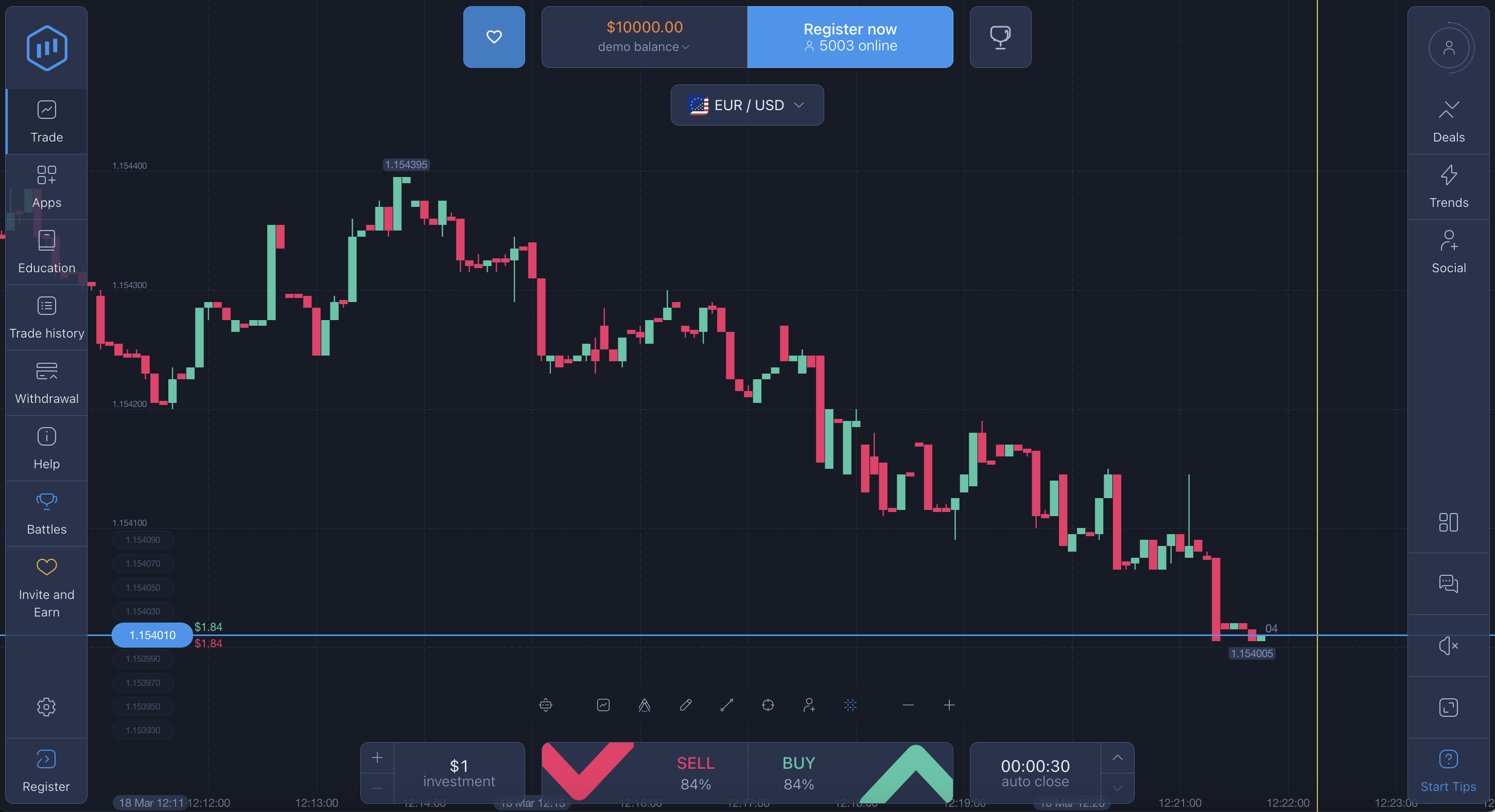
On ExpertOption, the free demo account hands you virtual funds to trade with, using the same live market conditions, charts, and tools you'd get on a real account. Try trend following this week, switch to range trading the next, see how your risk rules actually hold up in practice — all without touching a cent of your own money. There's no registration needed to jump in either, so it's an easy way to get a feel for how expert option trading works before you ever put money on the line.
Most new traders who skip this step end up learning the same lessons anyway, just with real money instead of practice funds. Give the demo account a proper run first, get your strategy in good shape, and then step into a live account with a small deposit. It's one of the easiest ways to give yourself a solid start.
To Sum Up
No strategy guarantees success, and trading always carries risk. What separates traders who improve over time from those who don't usually comes down to a few things covered here: having a clear plan instead of trading on impulse, managing risk on every single trade, staying aware of the common mistakes that catch out most beginners, and testing everything on a demo account before any real money is involved.
None of this needs to happen overnight. Pick one strategy, practice it, review what happened, and adjust. That slow, methodical approach is what turns trading from a gamble into a skill you build over time.
Latest Posts
Trading Education
Trading News
Trading Strategies
Promotions & Tournaments
Success Stories & Tips
Platform Updates
Global events, stocks, crypto, forex
ExpertOption Reviews: An Honest Overview and Tips from Traders
5 minutes to readExpertOption Withdrawal Policy: How Withdrawals Work and Why Balance Management Matters
5 minutes to readExpertOption Reviews: An Honest Overview and Tips from Traders
5 minutes to readExpertOption Withdrawal Policy: How Withdrawals Work and Why Balance Management Matters
5 minutes to read